


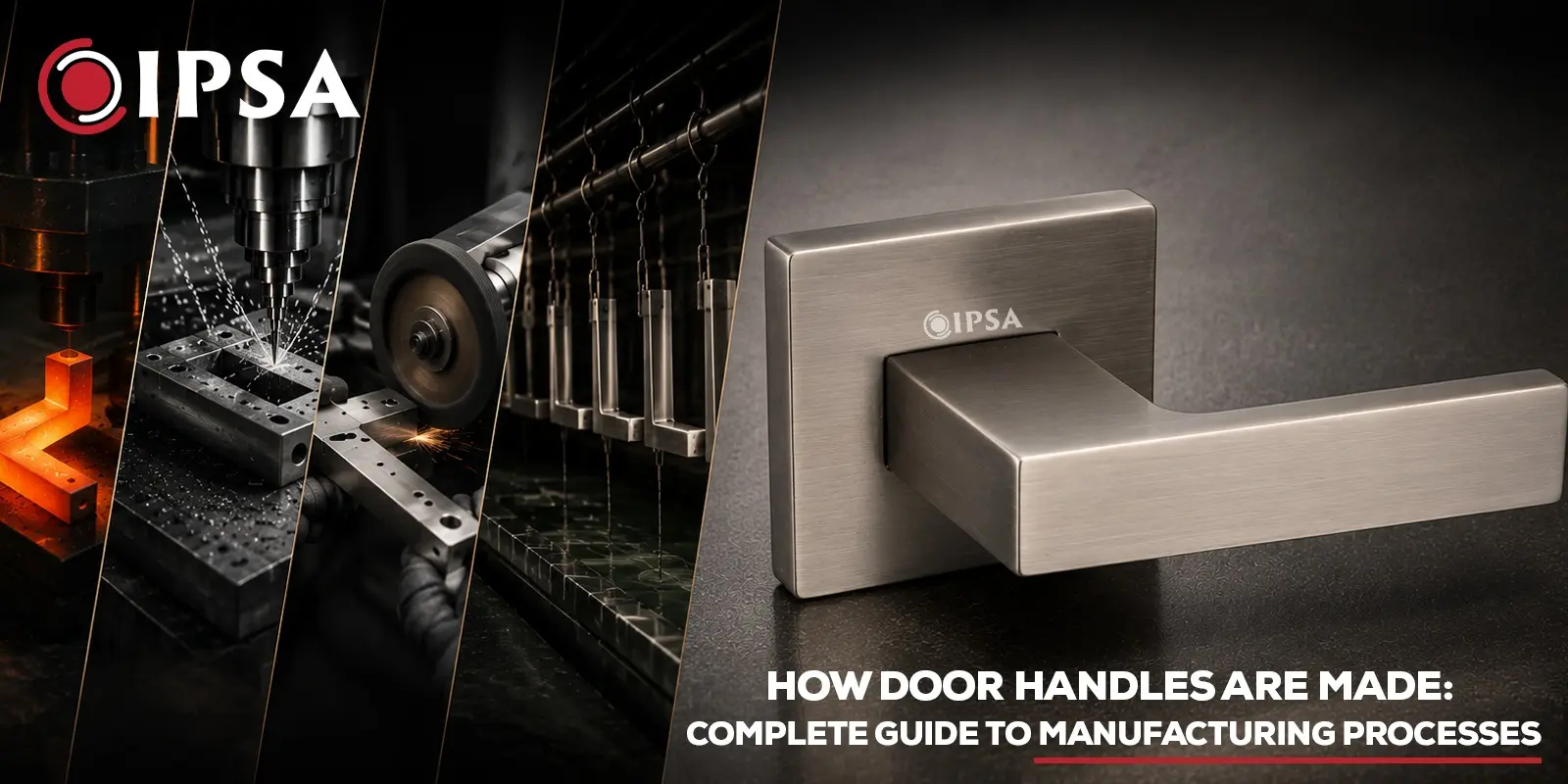
Every week, thousands of brass bars and zinc ingots drop into furnaces across manufacturing hubs, eventually morphing into everyday hardware. Yet most people only pay attention to a door handle when it rattles loose in their grip catches a sleeve or loses its finish within six months of installation. Manufacturing these fixtures seems simple on paper you melt metal pour it into a shape polish it up and ship it out. In reality, creating a handle that holds up under thousands of aggressive daily turns while resisting ambient humidity requires balancing metallurgy with precision machining.
Most discussions surrounding hardware focus strictly on surface aesthetics like matte black or brushed satin. Consequently, they gloss over the actual structural integrity built directly on the factory floor. In fact when examining door accessories manufacturing, the disparity between standard consumer-grade components and true architectural-grade hardware always traces back to raw material purity and early casting choices.
Understanding Metal Selection in Door Handle Production
| Manufacturing Stage | Process Details |
| 1. Raw Material Selection | Solid brass zinc alloy stainless steel and aluminum extrusions are selected based on quality and application requirements. |
| 2. Primary Shaping Phase | Components are formed using hot forging die casting extrusion and precision CNC machining. |
| 3. Surface Preparation and Polishing | Deburring robotic buffing and mechanical polishing create a smooth defect free finish. |
| 4. Electroplating and PVD Coating | Nickel and chrome electroplating along with Physical Vapor Deposition (PVD) enhance durability, corrosion resistance and appearance. |
| 5. Assembly and Quality Control | Technicians perform final assembly by including spring mechanisms and spindle fitting followed by rigorous quality checks such as salt spray testing functional testing and secure packaging. |
Key Materials in Handle Manufacturing
- Forged Solid Brass (Premium and Durable)
- Process: Hot forged under high pressure to remove air pockets and align metal grain.
- Benefits: Superior structural density prevents warping; high copper content resists corrosion; smooth surface creates strong electroplating bonds.
- Zinc Alloys / Zamak (Complex and Contemporary)
- Process: Liquid zinc injected into intricate molds under high pressure.
- Benefits: Ideal for sharp geometric designs that are difficult to machine.
- Trade-off: Requires precise pressure control to avoid microporosity and structural weak spots.
- Grade 304/316 Stainless Steel (High Traffic and Harsh Environments)
- Process: Machined, bent and welded directly from solid stock.
- Benefits: Chromium and nickel form a self-healing oxide layer that resists rust heavy foot traffic and harsh chemical cleaning.
Core Manufacturing Steps: From Raw Ingot to Machined Handle
- High Pressure Die Casting (Zinc/Aluminum)
- How it works: Molten metal is injected into steel molds at 400°C+ under hundreds of tons of hydraulic pressure.
- Critical Factor: Mold temperatures must stay strictly regulated—minor drops cause thermal shock creating hidden internal voids or surface pitting that ruin the finish later.
- Hot Forging (Solid Brass Levers)
- How it works: Extruded brass slugs are induction heated to ~700°C until pliable then pressed into shape without fully melting.
- Key Advantage: Keeping the metal in a solid state preserves its molecular grain structure preventing the handle from snapping at stress points like the neck junction.
- CNC Precision Machining (Mechanical Fit)
- How it works: Automated milling tools drill the square spindle cavity set screw threads and mounting plate faces to sub-millimeter tolerances.
- Why it matters: Precise fitment prevents spindle play or lever “sag ” ensuring the lockset feels firm and smooth during operation.
Surface Preparation and Advanced Electroplating
- Vibratory Deburring and Tumbling
- How it works: Raw handles tumble with ceramic or plastic media water and lubricants to remove flash lines oxidation and sharp edges.
- Why it matters: Prepares a uniform smooth surface baseline before polishing.
- Robotic Buffing and Polishing
- How it works: Automated robotic arms pass handles across compound-coated cotton wheels to achieve a mirror finish.
- Critical Factor: Unpolished micro scratches get permanently magnified once plating is applied making precision buffing essential.
- Multi-Layer Electroplating
- How it works: Submerges cleaned handles into charged chemical baths to electrically bond metal ions (like copper or nickel) to the base handle.
- Why it matters: Transforms raw castings into finished architectural hardware by adding protective corrosion-resistant layers.
| Stage | Layer | Purpose |
| 1 | Base Metal (Cast Zinc) | Forms the core structure of the hardware component. |
| 2 | Copper Strike | Provides strong adhesion between the base metal and subsequent plating layers. |
| 3 | Nickel Layer | Creates a smooth, corrosion-resistant surface and improves durability. |
| 4 | PVD Coating | Adds the final colour, enhances scratch resistance and increases surface hardness for long-lasting performance. |
- Copper Layer: Acts as an adhesion bridge and fills micro imperfections in the raw metal.
- Nickel Layer: Provides deep corrosion resistance and gives the surface its reflective base depth.
- Final Chrome or PVD Topcoat: Physical Vapor Deposition (PVD) vaporizes titanium or zirconium alloys in a vacuum chamber depositing an atomic thin film that is up to four times harder than standard chrome. PVD coatings effectively eliminate chipping scratching and tarnishing even under extreme coastal salt spray exposure.
Testing Mechanical Integrity and Finishing Standards
A handle must endure tens of thousands of cycles over its lifespan without mechanical sag or surface degradation. Quality assurance involves rigorous physical testing before batch approval.
| Test Type | Testing Parameter | Purpose | Industry Standard |
| Cycle Endurance | Repeated mechanical depressing via pneumatic arms | Simulates years of daily usage to verify internal spring fatigue | ASTM F1577 / EN 1906 |
| Neutral Salt Spray (NSS) | Exposure to 5% salt fog environment inside sealed chamber | Accelerates corrosion to test electroplating and clear coat sealants | ASTM B117 / ISO 9227 |
| Torque and Load Limit | Applying rotational force to a locked handle mechanism | Ensures the lever handle does not shear off under heavy manual force | EN 1906 Class 4 |
| Adhesion Cross Hatch | Scoring plated surface and applying pressure sensitive tape | Checks if plated coats delaminate from the underlying metal substrate | ASTM D3359 |
We regularly review internal batch failure logs and field returns across commercial builds and the pattern rarely changes. Almost every premature hardware failure traces back to skipped cleaning steps prior to nickel plating or improper thermal management during the initial casting phase.
At IPSA, we maintain direct oversight across our production lines refining our internal casting and finishing protocols to eliminate these exact micro defects before hardware ever reaches a job site. Working through a dedicated door handle exporter helps developers and project buyers avoid the consistency headaches common with fragmented supply chains.
Conclusion
Creating dependable door hardware requires absolute control at every stage. You must manage everything from ingot metallurgy down to micron level plating depths. However manufacturers often cut corners on raw materials or tumbling cycles. As a result the hardware might look pristine right out of the box. Unfortunately everyday wear reveals those hidden compromises very fast. Seeing identical mechanical failures across commercial developments proves a clear point. Material density and machining precision matter far more than superficial polish. Ultimately, a well-manufactured handle should simply work. It ought to do its job quietly for years without loose play flaking finishes or sagging levers.
Whether sourcing through an established door handles trader or managing hardware specs directly for a large project, prioritizing proven forging practices and multi-layer PVD coatings pays off over time. Hardware shouldn’t need second thoughts once installed. Focusing on solid raw materials and tight tolerances upfront ensures doors operate smoothly day in and day out without costly replacements down the line.
