


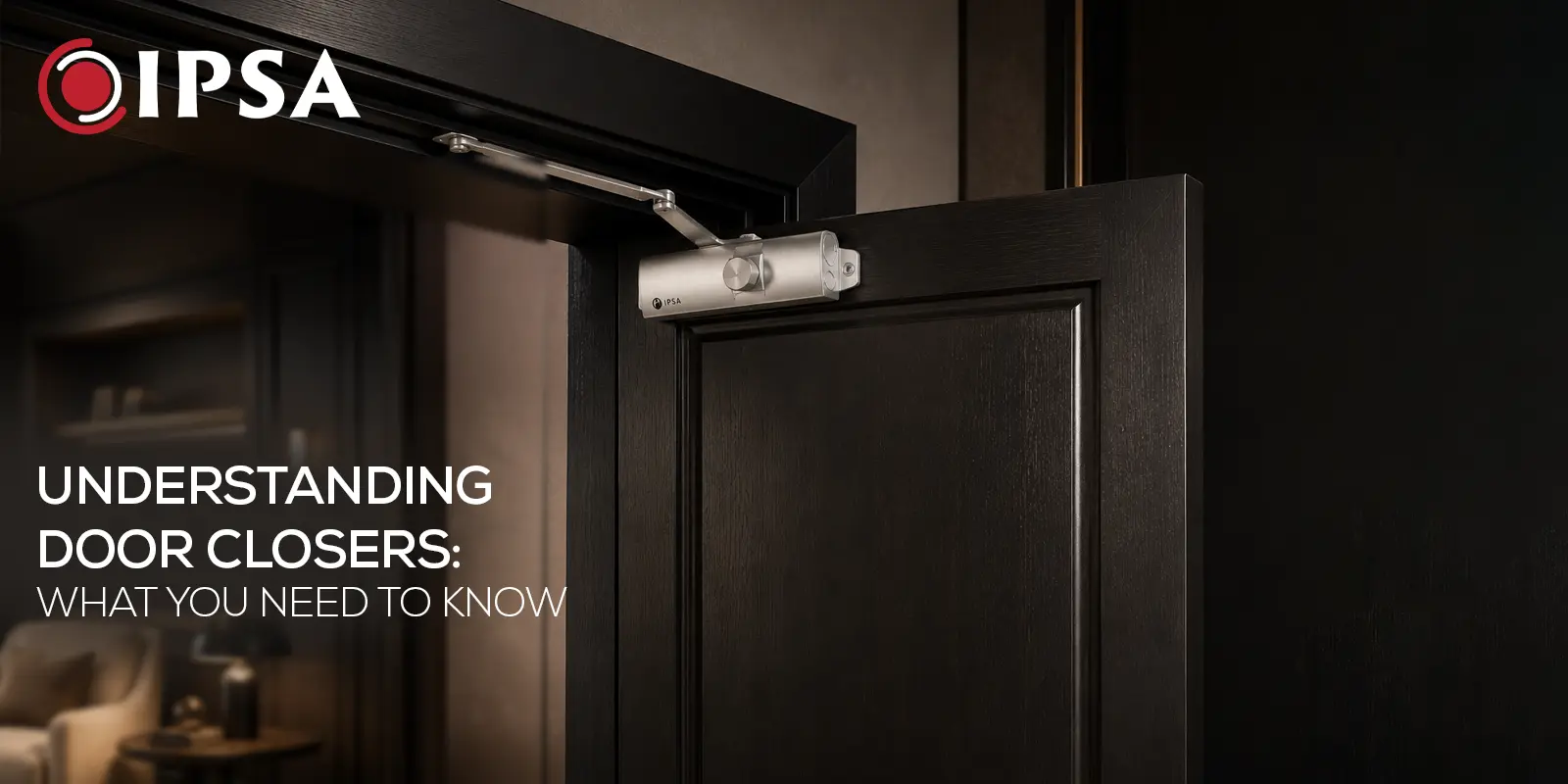
Walk through any busy commercial building and you will notice doors slamming hard or sticking halfway open. People blame the wind or heavy usage but the hardware usually tells a different story. Over years of working with building managers and contractors we repeatedly see the same mistake: treating door hardware as an afterthought. Finding a dependable door closers exporter helps yet understanding mechanical requirements matters far more. A door that fails to latch properly compromises security fire ratings and daily convenience. Paying attention to hydraulic performance early saves endless maintenance headaches down the road.
Why Choosing the Right Door Closer Matters More Than You Think
When a door slams loudly enough to shake the wall frame someone usually turns the wrong adjustment valve. We see this constantly on job sites. People assume all mechanical hardware performs identically but internal hydraulic dynamics dictate everything. Inside a quality cast aluminum housing hydraulic fluid flows through precision machined internal channels to cushion movement.
According to standard industry testing under BS EN 1154 controlled closing hardware undergoes rigorous 500 000 cycle endurance tests to verify long term performance. If a unit lacks high grade thermal hydraulic fluid sudden ambient temperature shifts cause viscosity changes. A door that shuts smoothly during cold winter mornings might slam violently on hot summer afternoons simply because the internal oil thinned out.
Heavy Doors Require a Certified Hydraulic Door Closer
Matching door leaf weight and width to the closer power rating is essential for operational longevity. Standard power classifications range from EN 2 for lighter internal entryways up to EN 4 or EN 5 for heavy exterior barriers. Installing a weak mechanism on an 80kg solid timber or metal leaf causes internal seal failure within a few months. The hydraulic oil leaks, spring tension disappears and the arm completely loses control.
In our work supplying commercial building projects client feedback repeatedly highlights how quickly improper weight matching destroys arm assemblies. We frequently walk maintenance engineers through replacing worn mismatched units with correctly rated overhead models. When a project team uses an established door closers brand like IPSA across high use facilities they get components engineered for 500 000 cycle durability alongside dual speed valve controls. That structural reliability prevents frame strain sagging hinges and unnecessary hardware replacement cycles.
Adjusting Sweep and Latching Speed Prevents Slamming Door Closers
Hydraulic closers rely on two distinct control zones: sweep speed and latching speed. Sweep speed governs movement from a fully open position of 180 degrees down to roughly 20 degrees. Latching speed takes over for that final crucial arc providing the necessary force to seat the latch bolt firmly into the door strike plate without shaking the frame.
- First stage sweep adjustment: Turning the primary valve clockwise slows main closing speed giving pedestrians ample time to pass through without getting bumped.
- Second stage latching adjustment: The secondary valve handles the final closure. Adjusting it too fast causes loud slamming; adjusting it too slow leaves the door slightly ajar compromising HVAC efficiency and perimeter security.
- Backcheck cushioning: Higher grade commercial units feature an integrated backcheck valve that acts as a hydraulic brake when a door is thrown open forcefully by strong winds or heavy foot traffic.
A common mistake installers make during setup is forcing or over rotating the internal gear shaft beyond 180 degrees. That over torque snaps internal seals immediately causing permanent fluid loss and total loss of tension.
How Proper Installation Keeps Hydraulic Door Closers Functioning Seamlessly
Mounting position directly affects both leverage and closing efficiency. In fact surface-mounted units typically support three standard configurations. These include regular arm pull side top jamb push side and parallel arm push side. Naturally each mounting style changes how force moves across the hinge line.
Consequently architects often prefer parallel arm setups. This is because the arm folds flat against the door frame which keeps visual profiles neat and clean. However parallel mounting inherently reduces closing torque by about 20 percent compared to a regular arm setup. Therefore if you choose parallel arm mounting for a heavy exterior door you must increase the closer size by one power rating to balance out that loss of mechanical leverage.
Standard Overhead Door Closers Work Best for High Traffic
High traffic public corridors in schools, hospitals and commercial office towers require durable surface mounted overhead units. Glass partitions or minimal aluminum profile entryways on the other hand frequently demand concealed overhead units or floor springs to maintain clean aesthetic lines.
During a recent retrofit collaboration with one of our enterprise facility management clients the site engineer reported recurring latch failures across main emergency exit corridors. The original construction team had fitted light residential hardware on heavy commercial fire doors. Replacing those failing units with EN 4 certified overhead models equipped with palmet arms completely eliminated the issue.
Essential Hardware Selection Checklist:
- Door Leaf Weight & Width (Fits up to 1100mm width and 80- 100 kg mass)
- Traffic Frequency (Low residential vs continuous public access)
- Fire & Smoke Safety Compliance (BS EN 1154 Grade 1 fire rating)
- Installation Mounting Style (Regular arm top jamb or parallel arm)
IPSA provides hydraulic door closers for various door weights, mounting styles and traffic levels.
Standard Surface-Mounted Closers: The IPSA DC 65 is an EN 3 rated aluminum closer for interior doors up to 65 kg and 1000 mm wide featuring dual-stage adjustment. For busier entryways the IPSA DC 80 offers an EN 4 rating handling doors up to 80 kg and 1100 mm wide with a heavy-duty rack-and-pinion system and thermal hydraulic fluid.
Palmet Arm Closers: The IPSA DC80/P uses a specialized Palmet arm plate for tight clearances supporting doors up to 80 kg and 950 mm wide at an EN 2 rating. For heavier barriers, the IPSA DC100/P delivers an EN 4 high-torque setup built for solid wood glass or metal doors up to 100 kg and 1100 mm wide.
Concealed Closers: The IPSA CDC85 hides completely inside the door leaf and frame header. Rated EN 2 for doors up to 85 kg and 950 mm wide, it maintains clean visual lines while delivering full hydraulic control.
Fire safety regulations strictly mandate reliable self-closing mechanisms on fire-rated doorsets. A fire door that fails to latch shut due to weak hydraulic pressure allows smoke and toxic gases to migrate between building zones. Correct mechanical specification and precise valve setup keep occupants safe while maintaining thermal efficiency across your facilities.
Conclusion
Getting door hardware right comes down to matching mechanical ratings with daily operational reality. When weight traffic volume and valve settings align doors operate quietly and latch securely without constant recalibration. Working alongside an experienced door closer supplier ensures your entryways meet safety codes while withstanding heavy, long-term use. Take time to inspect your current door assemblies check valve tensions and address minor latching issues before small mechanical failures turn into costly hardware replacements.
