


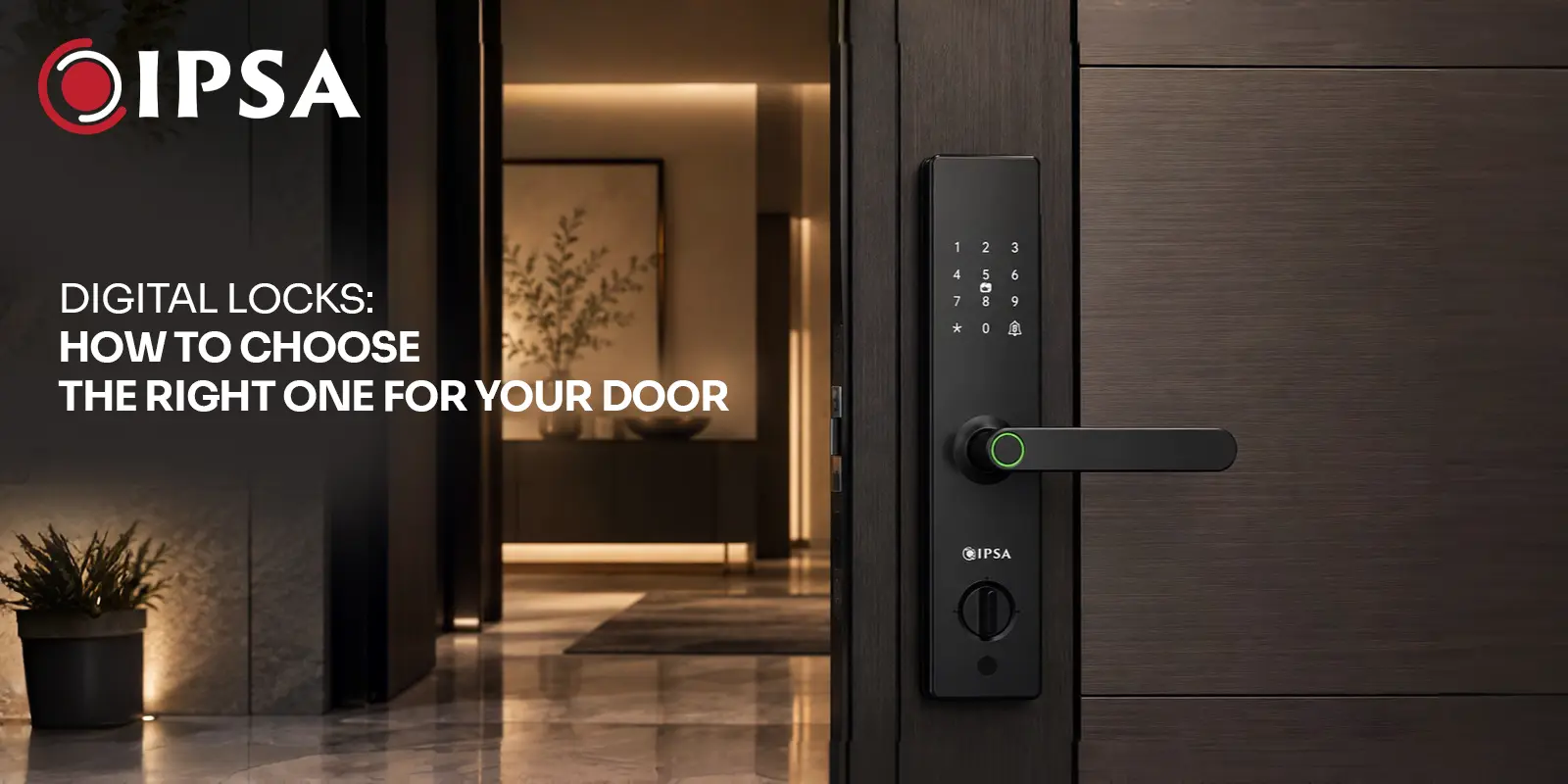
In olden days it’s was very easy to get a lock. You checked the size, chose a suitable design, and carried on. Digital locks have changed that decision. In the modern era, we have options to open doors with a fingerprint, PIN, card, or smartphone, and not only this but also a combination of all these. These excess choices are useful, but they create confusion.
Despite choices, every lock is not for every door, and every feature is not useful in every workplace or home. Therefore, it’s essential to take advice from a renowned digital lock manufacturer to understand the lock and what is suitable for your needs.
Start With the Door
Before comparing models, look at the door itself. A digital lock has to fit the door properly. Its thickness, material, existing lock arrangement, and available space can all affect installation.
Door Compatibility Comes First
This is an easy detail to overlook when shopping online. A lock designed for one type of door may not suit another. Wooden doors, metal doors, glass doors, and particular mortise arrangements can require different solutions.
AT IPSA’s smart-lock range includes models designed around different door applications. The Series 35 is one of our options for wooden doors, while other models cater to different installation requirements. We recommend checking the product specifications and measuring your door before ordering. A few minutes spent measuring can prevent a difficult installation later.
Decide How You Want to Unlock
There is no single best access method. A family may prefer fingerprints because everyone can enter without carrying a key. An office might find RFID cards easier to manage. A rental property may benefit from temporary codes or app-based access.
Fingerprint Access
Fingerprint access is particularly convenient for regular users. You don’t have to remember a PIN or carry anything with you. However, we still recommend having another way to enter. Wet fingers, damaged skin, or a low battery can make biometric access less convenient at certain times.
PIN and RFID Access
PIN access works well when several people need entry. You can provide a code without handing over a physical key. RFID cards offer another straightforward option, especially in offices, hotels, and other shared spaces.
IPSA’s range includes different combinations of these access methods rather than putting every feature into every model. That allows buyers to choose according to their actual requirements.
Think About Your Daily Routine
Ask yourself a few simple questions. Who will use the lock? How often will they enter? Do you need remote access? Will visitors need temporary access? Is the door inside a private home or part of a commercial property?
Your answers will narrow the choice quickly. For example, the IPSA Series 45 Pro combines fingerprint, PIN, RFID, Bluetooth, mechanical key, and connected access options. That makes it more suitable for users who want several ways to manage entry. Someone who only wants PIN and fingerprint access may not need the same configuration.
What About App and Wi-Fi Access?
Connected locks can be useful, but they are not necessary for everyone. Bluetooth can handle nearby communication with a phone. Wi-Fi-based connectivity is more relevant when you want to manage or monitor access remotely.
Check Whether a Gateway Is Required
This is an important distinction when comparing products. Some locks offer connected functionality through an additional gateway rather than having direct Wi-Fi built into the lock.
IPSA offers a Smart Way Wi-Fi Connector for compatible smart-lock systems. This allows buyers to consider connected functionality without assuming that every lock has identical connectivity. If remote access matters to you, check the complete setup before purchasing.
Never Ignore Emergency Entry
Electronic locks still depend on electronics and batteries. That means emergency access deserves as much attention as the main unlocking method.
Look for a backup.
A low-battery warning gives you time to replace the batteries before the lock stops responding. Emergency power can help when the batteries have already run down. A physical key can provide another backup route.
IPSA’s digital-lock specifications include features such as emergency power and low-voltage indications on selected models. Our product range also includes locks with mechanical-key access. These are not features you may notice every day. They become important when the normal method isn’t available.
Security Is More Than Keyless Entry
Removing the physical key doesn’t automatically make a door secure. The overall lock design matters.
Check the Protection Features
Depending on the model, look for features such as:
- Auto-locking
- Tamper or break-in alerts
- Anti-peep PIN entry
- Mechanical override
- Low-battery warning
- Emergency power
- User-management options
For instance, IPSA’s Series 45 Pro includes an anti-peep feature for PIN entry and a low-battery alert. These features address practical situations rather than simply adding technology to the specification sheet.
Which IPSA Lock Should You Consider?
We don’t recommend choosing an IPSA lock by series number alone. Start with the door and then work backwards from the features you need.
For Multiple Access Methods
The Series 35 supports several access options, including fingerprint, PIN, RFID, Bluetooth, mobile-app connectivity, and mechanical-key access, depending on the configuration.
For Connected Access
The Series 45 Pro provides several entry methods and can work with connected features through the appropriate setup. It is worth considering when flexibility is important.
For Different Door Setups
Our range also includes rim-lock, cylinder-lock, and other smart-lock formats, including Series 50, Series 60, Series 75, and Series 85. The installation style and specifications differ, so these should be compared based on the door rather than treated as interchangeable products.
This is where buying from an established hardware brand becomes useful. You can compare different configurations instead of trying to make one model work for every situation.
Why the Manufacturer Matters
A digital lock is not something you should choose only from a product photograph. The manufacturer behind it matters because installation information, specifications, warranty, support, replacement components, and product consistency all affect ownership.
IPSA states that it operates manufacturing units, warehouses, and distribution networks across India. It also identifies digital locks among its core product categories and supports homeowners, professionals, OEMs, architects, and other buyers.
For IPSA Mart customers, the online platform provides direct access to the IPSA product range and is positioned as the official online shopping experience of IPSA Group.
A Simple Checklist Before Buying
Before placing an order, check:
| What to check | Why it matters |
| Door material | Confirms suitable application |
| Door thickness | Helps avoid installation problems |
| Lock format | Must match the door structure |
| Access methods | Should suit the people using it |
| Emergency entry | Provides a backup when electronics fail |
| Battery information | Helps avoid unexpected lockouts |
| Connectivity | Determines whether remote access is possible |
| Security features | Adds protection beyond keyless entry |
| Installation | Ensures the lock operates correctly |
| Warranty and support | Matters throughout ownership |
Conclusion
A digital lock should make access simpler without making the door complicated. That starts with choosing a lock that fits the door and then selecting the access methods that make sense for the people using it. Fingerprint access may suit a family, while PIN or RFID can work better where several people need entry. Connected features can add another layer of convenience when remote management is genuinely useful.
At IPSA Mart, we offer different locking formats and access combinations because one door does not have the same requirements as another. As a digital locks brand backed by IPSA Group’s manufacturing and hardware experience, our focus is not simply on adding technology to a door. It is on giving buyers practical choices, clear product information, and hardware that fits the way they intend to use it.
