


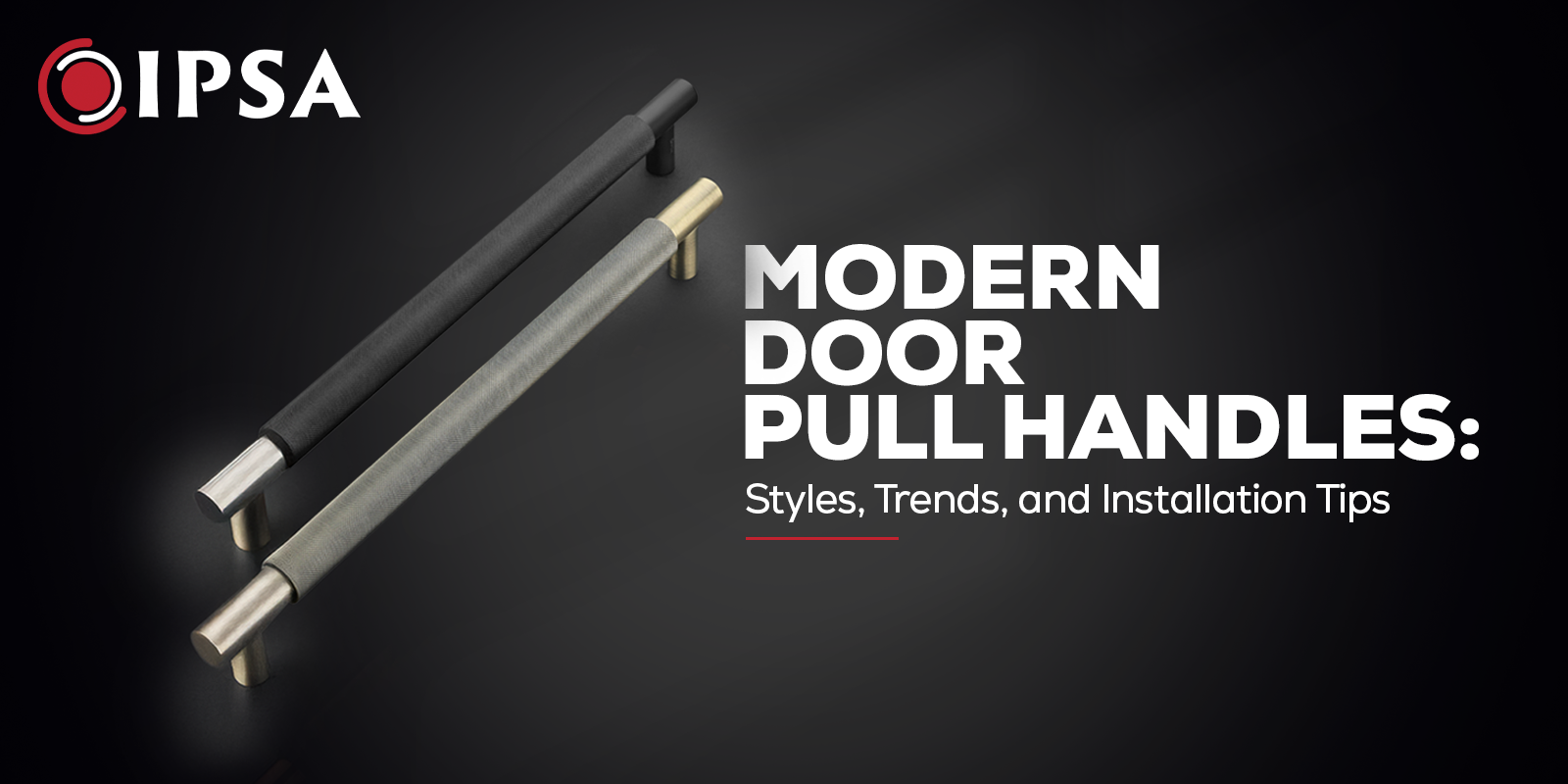
Walking up to a beautifully designed building only to wrestle with a loose and flimsy entrance door pull handle completely breaks the architectural illusion. It happens more often than you think, especially when projects prioritize the thickness of the timber or the clarity of the glass. However, treat the hardware as an afterthought. Choosing a high-quality stainless steel door pull handle becomes critical as doors grow larger and heavier in modern layouts.
Finding that exact sweet spot where a handle feels solid, looks right, and survives constant daily use is tougher than it looks on paper.
The Evolution of Main Entrance Aesthetics
When we look at how entrances have shifted over the last couple of years, the visual weight of the door itself has changed drastically. Standard-sized entries are giving way to floor-to-ceiling pivot structures and expansive glass facades. Naturally, the hardware had to adapt because a tiny, traditional lockset completely loses its sense of proportion on a ten-foot door.
Why Scale and Weight Dictate Handle Choice
A heavy door requires physical leverage, plain and simple. If the handle doesn’t offer a substantial grip length, users end up straining against the weight of the material. We are seeing architectural trends leaning heavily toward extended vertical profiles. Eventually, they balance the massive scale of contemporary entries while making the actual act of opening the door feel effortless.
Tactile Feedback is the New Minimalism
Minimalism used to mean making things invisible, but today, it is about making the visible elements feel incredibly intentional. The texture under your palm matters. Architects are moving away from hyper-polished and mirror-like surfaces that show every single smudge and fingerprint that need to be cleaned within minutes of cleaning. Instead, the focus is squarely on brushed, matte, or micro-textured finishes that absorb light and feel deeply grounded.
Material Shifts Dominating Modern Architecture
Choosing the foundational metal isn’t about matching everything perfectly; it is about choosing something that ages gracefully under changing weather conditions. A material that looks pristine in a showroom can easily look weathered and cheap after a single monsoon or summer heatwave if the composition isn’t right.
The Standard of High Grade Stainless Steel
There is a very practical reason why certain metals remain the industry default across commercial and premium residential builds. When you use a stainless steel door handle pull, you are basically betting on structural permanence. The inherent chrome and nickel content in high-grade alloys forms a self-healing oxide layer. In humid coastal areas, this prevents deep rust and structural pitting.
|
Finish Type |
Real World Performance Observation |
|
Brushed Satin |
Hides prints beautifully; low reflectivity |
| Matte Black PVD |
Bold contrast; requires high-grade bonding |
| Raw Textured |
Industrial feel; exceptional physical grip |
Moving Beyond Simple Coatings
Cheap hardware relies on thin electroplating that flakes off around the screw joints after a year of friction. Premium manufacturing focuses on PVD (Physical Vapor Deposition) coatings or deep satin brushing, where the texture is embedded directly into the metal substrate. It keeps the surface hygienic and easy to wipe down. Therefore highly resistant to the oils and acids naturally present on human hands.
Balancing Form and Function in Production
We have handled enough project handovers. Consequently, we do know what looks sleek in a digital render or what can turn into a logistical nightmare during procurement. Hence, it didn’t if you are sourcing for a major development; consistency across hundreds of units is everything.
Behind the Scenes of High-Volume Manufacturing
When we look at how a premier ss pull handles manufacturer operates, the difference lies entirely in the details you cannot see from the outside. It is the internal wall thickness of the hollow tubes. Moreover, the precision of the mitered corners as well as the quality of the internal mounting bushes. If the internal threads are poorly tapped, the handle will inevitably begin to wobble after a few months of heavy traffic, no matter how tightly the installer screws it in.
A Note on Quality: True architectural-grade hardware doesn’t use cast scrap metal. It relies on solid or heavy-gauge extruded tubes that maintain straightness across long spans without warping during the polishing process.
Navigating Global Supply Logistics
For large-scale commercial builds or high-end residential communities, local suppliers often fall short on volume or custom sizing. This is where working with established exporters like IPSA India makes a massive difference in project timelines. Having access to rigorous batch testing means the hardware arriving on site matches the specified tolerances exactly, saving days of back-and-forth arguments during the installation phase.
Practical Realities of Door Hardware Installation
Even the most expensive, beautifully finished hardware can feel like garbage if the installation is slightly misaligned. It is a deceptively simple process that carries a lot of room for error.
- Mark the Centerlines: Always use a physical template rather than trusting a tape measure across a warped door face.
- Drill with Thread Alignment: Ensure the boring holes are perfectly perpendicular to avoid cross-threading the mounting bolts.
- Secure the Back-to-Back Fixings: Use thread-locking compound on the hidden grub screws to prevent loosening over time.
The Nightmare of Glass Door Fixing
Installing hardware on glass is completely different from timber. You get one shot; if you stress the glass around the borehole by over-tightening a metal-on-glass connection without proper rubber or PVC gaskets, the entire pane can shatter instantly or crack later under thermal expansion.
Managing Heavy Timber Movement
A massive teak or oak door will swell in the summer and shrink in the winter. If your pull handle fixings are too rigid or lack a tiny bit of internal play, the seasonal movement of the timber can put immense pressure on the mounting brackets, leading to misaligned latches or loose grips.
Final Thoughts
At the end of the day, an entryway should feel like a seamless transition into a space. Obviously, it should not be an obstacle course. Here, we often notice that the projects that feel truly premium are the ones where the hardware choice was treated with the same respect as the structural layout. It is about choosing pieces that feel solid the first time you touch them and remain exactly that way ten years down the road. By keeping the focus on clean lines, reliable metal grades, and smart installation practices, you can avoid the endless cycle of replacing cheap fixtures every few seasons.
Sourcing from a reliable stainless steel pull handles exporter like IPSA India ensures the materials can withstand environmental wear while keeping that premium feel. Therefore, investing in hardware that balances structural integrity with an understated, lived-in aesthetic simply makes sense for any space meant to last.
