


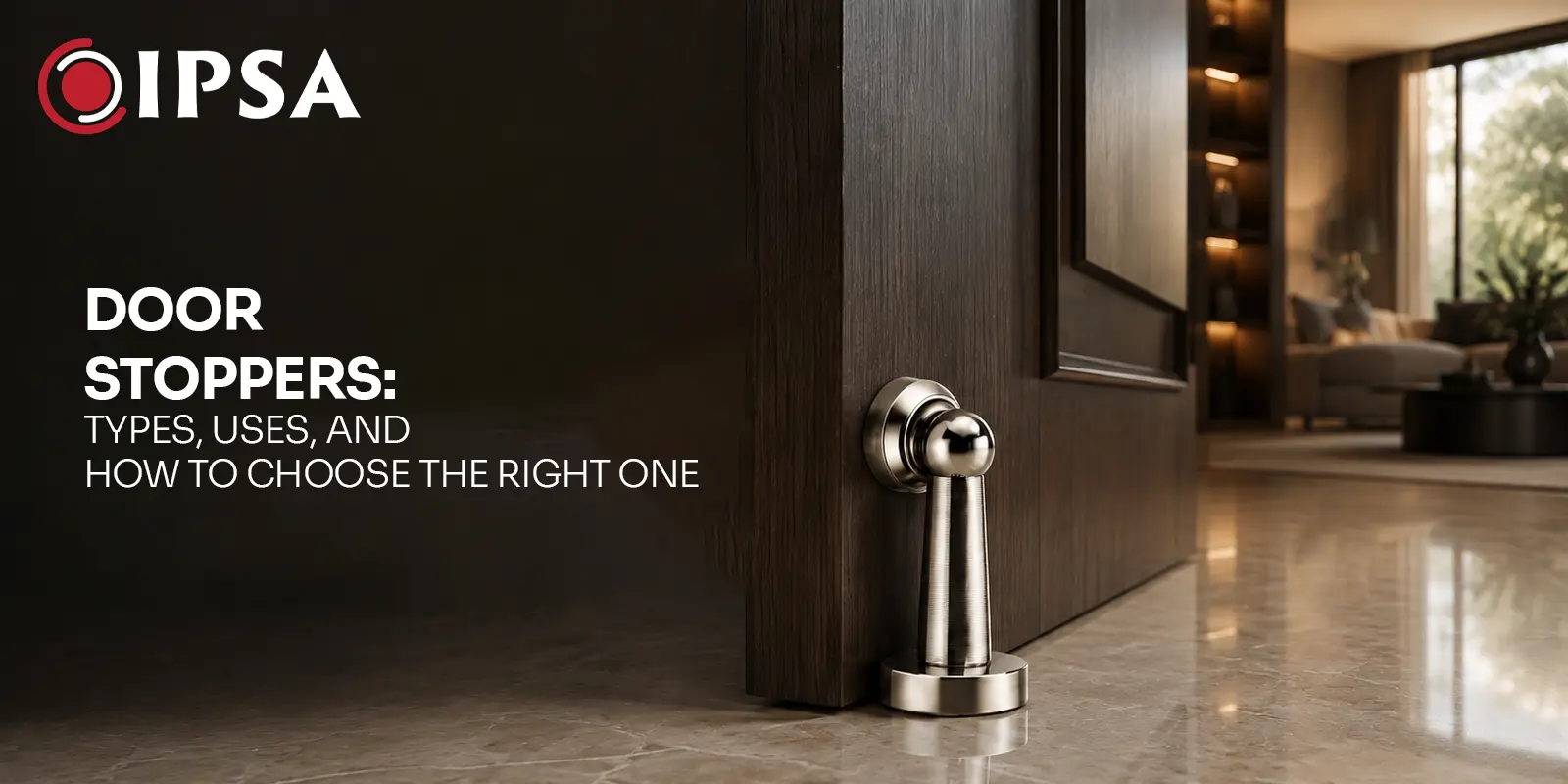
The type of door you have can make a difference when choosing door stoppers. A heavy door needs something that can handle its movement, while a lighter one may need very little. You also need to look at the space around the door. There may be room for a floor stopper, or a wall-mounted one might make more sense. Magnetic and door-mounted models are also available. If you’re looking at products from a door stopper manufacturer, these are a few things to check before making a choice.
Why Does a Door Need a Stopper?
Open a door too quickly, and the handle can hit the wall. Leave an interior door open near a window, and a sudden draft can send it moving. In a busy home, that repeated impact can leave marks on walls, loosen fittings, or damage the door itself.
A stopper gives the door a defined stopping point. It also does something else that’s easy to overlook. A well-designed stopper can make everyday movement around the house quieter and less frustrating.
It’s Not Only About Preventing Wall Damage
Think about a kitchen door opening into a cabinet. Or an office door that keeps swinging shut while you’re working. Or a bedroom door that needs to remain open during the day.
The right stopper can solve each situation differently. That’s why the installation position matters before the appearance of the product.
Different Types of Door Stoppers
Door stoppers come in several forms, and each has its own place. A floor-mounted stopper works close to the bottom of the door. A wall-mounted buffer protects the wall itself. Door-mounted designs attach directly to the door, while magnetic versions can hold the door open as well as stop its movement.
Floor-Mounted Door Stoppers
These are useful when you want the stopper positioned between the door and the floor. They can work particularly well where the wall behind the door isn’t suitable for drilling or where the door needs a firm stopping point.
IPSA offers a 1 Leg Door Stopper in SS202, along with a half-moon sphere-type floor-mounted stopper in its range. These options give homeowners different shapes and finishes depending on the door and surrounding interior.
The important part is placement. A floor stopper needs to sit where the door will naturally meet it. Installing it too close to the hinge or too far from the opening can reduce how effectively it controls the door.
Wall-Mounted Door Buffers
Sometimes the wall is the obvious place to protect. A wall-mounted buffer creates a soft contact point between the door and the wall. This can be useful in bedrooms, offices, corridors, and other areas where floor installation isn’t convenient.
IPSA’s wall-mounted door buffers are available in finishes including antique, black, rose gold, and gold. That gives you some freedom to match the stopper with the existing door hardware rather than treating it as something purely functional.
When Magnetic Door Stoppers Make More Sense
A normal stopper prevents the door from travelling too far. A magnetic stopper can do a little more. It can catch the door and help keep it open, which becomes useful in places where people regularly move between rooms.
Think about carrying groceries into the kitchen. You don’t want to keep pushing the door open with your shoulder. A magnetic stopper can hold it in position once opened.
IPSA DSM804 for Medium Doors
IPSA’s DSM804 magnetic door stopper is designed for medium doors and comes in a stainless-steel finish. It’s one of the more practical options when you need both stopping and holding functionality. This is a good example of why choosing by appearance alone can be misleading. Two stoppers may look similar online but perform very different jobs once installed.
What Should You Check Before Buying?
Start with the door. How heavy is it? How far does it open? Where does the handle currently hit? Is there enough floor space for a floor-mounted stopper? Then look at the material and finish.
A bathroom, bedroom, office, and main entrance may all need different hardware because their usage isn’t the same. A good door stopper supplier should make those specifications clear rather than leaving you to guess from a product photograph.
Consider the Door’s Weight
A lightweight interior door doesn’t necessarily need the same stopper as a heavier wooden door. IPSA’s Bullet Heavy Door Mounted Door Stopper, for example, uses high-density brass with a high-tension spring and core-ball mechanism. It also includes a long-life rubber component and adjustable movement. That’s the kind of construction worth considering when the door experiences frequent movement. The stopper should control the door without making every opening feel stiff.
Match the Stopper to the Installation
Once you’ve decided what the stopper needs to do, look at where it will go. A floor stopper needs suitable floor space. A wall buffer needs a solid fixing point. A door-mounted stopper needs enough clearance to work without interfering with the frame. This sounds obvious, but installation is where many otherwise good choices go wrong.
Check the Door and Surrounding Space
Open the door fully before deciding where the stopper should sit. Look at the handle, skirting board, wall, nearby furniture, and floor level. The stopper should catch the door before the handle reaches the wall.
For heavier or frequently used doors, construction matters even more. A stronger stopper with suitable fixing hardware can handle repeated impact better than a lightweight option.
Where Different IPSA Door Stoppers Work Best
IPSA’s range covers several common door situations rather than forcing every door to use the same stopper. The DSM804 magnetic stopper is useful where holding the door open is important. The Bullet Heavy Door Mounted Stopper is designed for heavier doors that need a stronger door-mounted solution. Floor and wall-mounted options provide alternatives when the installation conditions are different.
What Makes IPSA a Practical Choice?
A stopper is a small part of a door, but it still needs to be reliable. That’s why choosing the right manufacturer matters when you’re fitting hardware across a home, office, hotel, or commercial project.
IPSA offers different stopper formats, materials, mounting options, and finishes within its door-hardware range. That gives customers the freedom to choose according to the door instead of compromising with one standard design.
For projects that require multiple types of hardware, having different options from one Door stopper brand can also make selection and specification simpler.
Final Thoughts
The right door stopper is the one that suits the door, the space, and the way the door is used. Start by identifying where the impact occurs, then decide whether you need a floor-mounted, wall-mounted, door-mounted, or magnetic solution. Check the door’s weight, installation area, material, and finish before ordering. IPSA brings these options together with different designs for everyday residential and commercial requirements. When you choose the stopper around the actual door rather than the product photograph, a small hardware upgrade can prevent bigger problems for years to come.
