


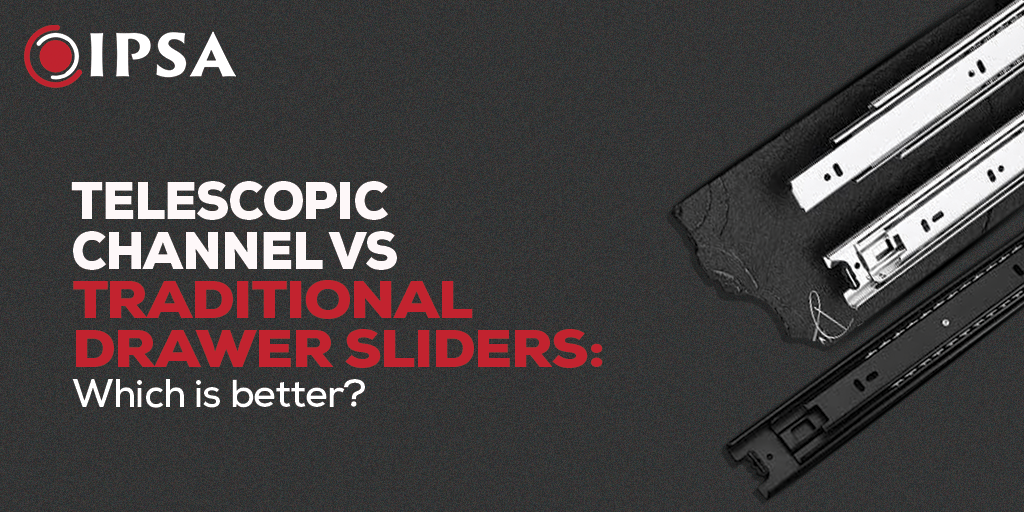
Having a drawer, opening smoothly, effortlessly gliding it in and out without a hitch, is what we all want in our homes. And, now, think about the frustration when a drawer gets stuck, wobbles, or even falls off its track. The difference lies in the type of drawer sliders one has used. There are multiple drawer channels or slides available in the market which can upgrade your storage space and also enhance functionality.
However, choosing the suitable drawer channel becomes a task due to the wide range of products. Among the most popular choices are telescopic channels and traditional drawer sliders. Both have distinct features and benefits, but which one is better for your needs?
In this blog, we’ll compare them in terms of durability, smoothness, ease of installation, and overall performance to help you pick the right one.
Drawer Slides:
These are the mechanical devices that allow drawers to move in and out smoothly. These slides are essential for cabinets, dressers, kitchen units, office furniture, and various storage solutions. The two common types are:
- Traditional drawer sliders: Typically made of wood or basic metal tracks, these slides are commonly found in older furniture models.
- Telescopic channels: Advanced ball-bearing drawer slides that offer enhanced smoothness, durability, and load-bearing capacity.
Telescopic Channels: Features and Benefits
A telescopic channel is a set of interconnected metal tracks designed to facilitate smooth drawer movement. It operates using ball-bearing drawer slides, ensuring effortless gliding. These channels enable the full extension of drawers, maximizing storage accessibility. Furthermore, they are commonly used in cabinets, furniture, and industrial storage systems for durability and convenience.
Advantages of Telescopic Channels
1. Smooth and Silent Operation
Unlike traditional sliders, telescopic channels use ball bearings, therefore, ensuring effortless gliding with minimal noise. This is particularly useful in homes and offices where a silent environment is preferred.
2. Full Extension Capability
Traditional sliders often limit how far a drawer can be pulled out, making it difficult to reach the back. Also, telescopic drawer channels allow full extension, providing complete visibility and access to stored items.
3. Higher Load Capacity
Ball bearing drawer slides are designed to handle heavy loads efficiently. Whether storing bulky utensils in a kitchen cabinet or keeping files in an office drawer, telescopic channels can support significant weight without warping or bending.
4. Durability and Longevity
Made from high-quality metal (usually stainless steel), telescopic channels are resistant to wear and tear. They last longer compared to wooden or plastic-based traditional drawer sliders, making them a long-term investment.
5. Easy Maintenance
These slides require minimal maintenance. Occasional cleaning and lubrication keep them in top condition, ensuring prolonged efficiency.
Traditional Drawer Sliders: Features and Drawbacks
Traditional drawer sliders are commonly found in older furniture or budget-friendly cabinetry. Moreover, they usually consist of basic metal or wooden tracks and are relatively simple in design.
Advantages of Traditional Drawer Sliders
1. Cost-Effective
If you’re working on a tight budget, traditional drawer sliders are a more affordable option compared to telescopic channels.
2. Easy to Install
With a simple design, these sliders are easy to install, making them a good choice for DIY projects.
3. Basic Functionality
For light-use drawers that don’t require full extension or high-weight capacity, traditional sliders can work well.
Drawbacks of Traditional Drawer Sliders
1. Limited Extension
Most traditional sliders only allow partial extension, meaning items stored at the back of a drawer can be difficult to access.
2. Less Durability
These sliders wear out faster, especially when exposed to heavy loads or frequent use. Wooden sliders, in particular, can warp over time due to moisture and temperature changes.
3. Jerky and Noisy Movement
Unlike ball bearing drawer slides, traditional sliders can be noisy and less smooth, causing inconvenience over time.
4. Lower Load Capacity
Traditional sliders struggle to support heavy loads. Overloading can lead to misalignment, drawer sticking, or even track breakage.
Which One Should You Choose?
Your choice between telescopic channels and traditional drawer sliders depends on various factors like usage, budget, and durability needs.
Choose Telescopic Channels If:
- You need a smooth and quiet operation.
- You require full-extension drawers for easy accessibility.
- Your drawers will carry heavy loads.
- You prefer a long-lasting and low-maintenance solution.
Choose Traditional Drawer Sliders If:
- You are on a tight budget and need a cost-effective option.
- Your drawers will only carry lightweight items.
- You are working on a DIY project and need an easy installation process.
To Wrap Up:
Both telescopic channels and traditional drawer slides serve their purpose, but when it comes to durability, smoothness, and efficiency, telescopic channels clearly have the upper hand. Further, investing in high-quality ball bearing drawer slides ensures a hassle-free and long-lasting experience, making them the preferred choice for modern furniture.
Whether upgrading your home or designing new storage solutions, always consider IPSA drawer channels that offer the best combination of functionality and longevity. So, choose wisely, and enjoy a seamless drawer experience every time you use them!
FAQs:
- What is the difference between telescopic channels and traditional drawer sliders?
Telescopic channels use ball bearings for smooth, full-extension movement, while traditional sliders rely on simple metal or wooden tracks with limited extension and lower durability. - Are telescopic channels more expensive than traditional drawer slides?
Yes, telescopic channels are generally costlier due to their advanced mechanism, higher load capacity, and durability. However, they offer long-term value by reducing maintenance and replacement costs. - Can I install telescopic channels myself?
Yes, telescopic channels can be installed as a DIY project, but they require precise alignment. Using a measuring tape and drill can help ensure a secure fit. - Do telescopic channels require regular maintenance?
Minimal maintenance is needed. Occasional cleaning and lubrication of ball bearings will ensure smooth operation and prolong their lifespan. - Which type of drawer slide is best for kitchen cabinets?
Telescopic channels are the best choice for kitchen cabinets as they allow full extension, therefore, making it easier to access stored items and handle heavy kitchenware. - Can traditional drawer sliders support heavy loads?
No, traditional sliders have a lower load-bearing capacity. Also, overloading can cause misalignment, sticking, or even damage to the track. - Where can I buy high-quality telescopic channels?
Telescopic channels are available at hardware stores, furniture markets, and online platforms specializing in home improvement and architectural hardware.
