


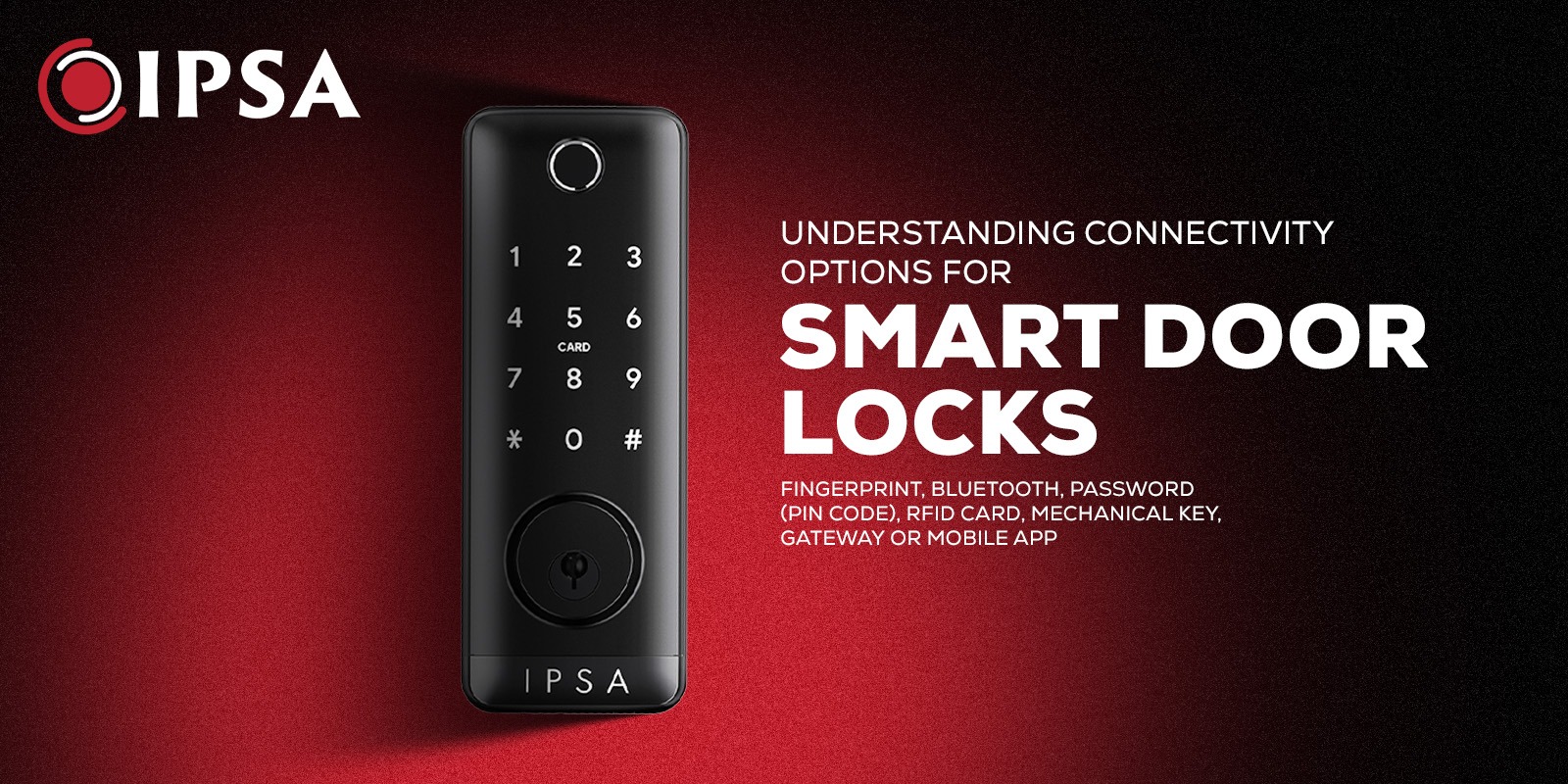
Understanding the different connectivity options available for smart door locks primarily involves knowing how door locks are connected, how signals are sent, and how commands are received. Currently, smart locks are becoming increasingly reliant on digital connections as a means of replacing traditional keys. As such, a good number of buyers prefer speaking to a digital locks trader before making up their mind. This transparency gives homeowners the ability to pick a smart lock that is suitable for their home.
Why Connectivity is Important In Smart Door Locks
Connectivity essentially dictates the means of communication between a lock and its users and devices. It also determines the speed of response as well as the reliability of the lock. Besides, it specifies the ways through which users can keep an eye on and control access. Ultimately, it is connectivity that determines how locks will perform daily.
Main Advantages of Picking the Right Connectivity
Efficient access control
Connectivity gives users the option to control door access electronically through mobile phones or control panels. Hence, users no longer have to worry about lost keys or problems with manually locking their doors. This level of control also becomes a great tool to grant permission to family members or staff. Consequently, entry management is more organized and adaptable.
Heightened security alert
Connected locks are capable of sending alerts not only when they are locked and unlocked but also in the case of a forced entry attempt. Hence, users are fully aware of every access event. Such notifications are a good way for the users to take immediate action in the case of unwanted activity. So, the level of home awareness is elevated overall.
Easy integration with devices
Lock connectivity links to smartphones or home automation systems. Thus, users can control the locks through apps they already have. This kind of arrangement lessens the number of separate controls needed. Consequently, the everyday operation remains consistent and straightforward.
Typical Connectivity Options for Smart Door Locks
Smart locks implement different connectivity technologies to cater to different needs. Hence, users need to align features with how they use the product.
Bluetooth Connectivity
Bluetooth establishes a direct connection between the lock and a phone close by. Therefore, it is appropriate for personal and basic usage.
Direct phone connection
Bluetooth links the lock with a smartphone without the need for the internet. Hence, users can open the doors immediately when they are in the vicinity. This way is rightly suited for home access on a daily basis. Thus, the daily home use remains simple and quick.
Low power consumption
Bluetooth employs only a small amount of energy for communication. Hence, the lifetime of batteries is longer between replacements. This advantage cuts down on the amount of work required to maintain the devices. As a result, users experience fewer interruptions.
Limited remote access
Bluetooth only operates within a very short range. Still, it does not allow access to the property from a remote location. This limitation means less vulnerability to remote risks. For this reason, some users prefer it for security purposes.
Wi-Fi Connectivity
Wi-Fi connectivity is the technology that allows the lock to communicate with the internet in your home. So, it permits control from far distances.
Full remote control
Wi-Fi makes it possible for users to lock or unlock their doors even when they are not home. Hence, users can administer their access rights even while on their trips or at work. This feature is very handy with delivery and guest situations.
Real-time alerts
Wi-Fi enables mobile app notification push directly to the phone. Hence, users never have to wait for the information they need. These alerts clearly indicate any change to the door’s status. Therefore, users get more time to react.
High power use
Wi-Fi connection requires a greater amount of power to maintain. However, most locks come with batteries as a backup. This battery support will make the lock work even when the power goes out. Thus, the trust factor is still there.
Zigbee Connectivity
Zigbee is the technology that links the locks via a smart home hub.
Strong network reliability
Zigbee creates a mesh network among the devices. Therefore, here and there, the signal gets through without problems. The network stays stable because of this structure.
Low energy usage
Zigbee is a very low-power consumption technology. So, a lock battery will last more cycles. This level of efficiency is perfect for the flow of regular work.
Hub requirement
Zigbee works when there is a hub at the center. On the other hand, hubs make it possible for the systems to be well coordinated. This manner of working can handle many appliances at the same time. Moreover, it becomes simple to do automation.
Z-Wave Connectivity
Z-Wave also controls via a smart hub. Hence, it enables secure system control.
Secure data transfer
Z-Wave communicates through encrypted signals. Hence, the access data is kept secure. This security measure lowers the risk of hacking, and thus, security is increased.
Wide device support
Z-Wave is supported by a large number of smart home platforms. Integration, therefore, remains flexible. This compatibility makes it easier to do future upgrades. The systems, therefore, expand with ease.
Hub dependency
Z-Wave cannot operate without a suitable hub. It is the hub, however, that enhances the coordination of the devices. Besides, the hub supports automation rules. Thus, the control is always reliable.
Choosing the Right Connectivity for Your Home
Every home is unique when it comes to how people access their homes. Hence, the choice is based on one’s daily habits.
- Small homes: Bluetooth is highly suitable for very short-range access. Hence, the installation is both easy and efficient.
- Busy households: Wi-Fi is the most suitable network for a household that frequently needs remote control, e.g., remotely unlocking the door. In this way, the family can always easily open the door for one another.
- Smart home users: Zigbee or Z-Wave is the right choice for those who have an automation system. Hence, the control is always centralized.
Final Thoughts on Smart Lock Connectivity
There is no doubt that comprehension of connectivity plays a major role in smart door lock selections by users. Hence, matching smart locks with the actual needs will be the most successful way of their operation. An informed digital lock seller can be an assistant to this decision. Thus, a proper choice of a smart lock for the home enhances the safety and convenience of the residence.
IPSA India is your go-to place for dependable and up-to-date locking solutions. Hence, IPSA India, through our tested smart systems, contributes to a secure living environment. Our brand is all about quality, durability, and establishing long-term trust.
