


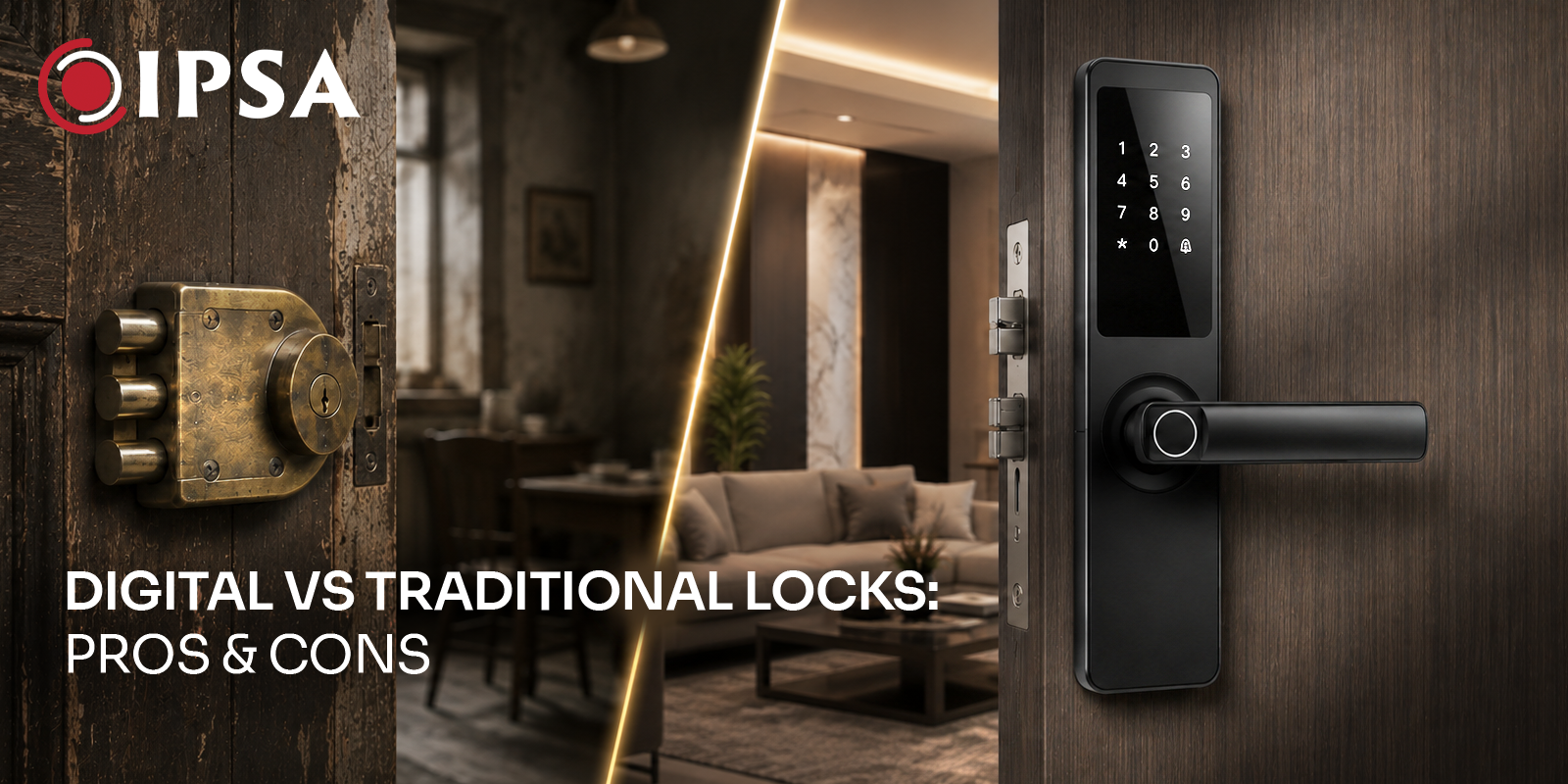
Choosing a door lock used to be straightforward. You picked a mechanical lock, kept a spare key, and moved on. Today, many homes and businesses are looking for easier ways to control access.
Traditional locks still have their place, but digital locks bring options such as fingerprints, passwords, RFID cards, Bluetooth and OTP access. The right choice depends less on which technology is newer and more on how the door is actually used.
Why Traditional Locks Still Work
Traditional locks remain useful because they are simple. There is no battery to replace, app to configure, or electronic system to learn. For bedrooms, storage areas, offices and secondary entrances, that simplicity can be enough.
The Key Is Both the Strength and Weakness
A physical key is easy to understand and maintain. The problem starts when several people need access.
Keys can be lost, copied, or handed between users. Managing them becomes harder in shared homes, offices, and rental properties. That is where keyless access starts to offer a practical advantage.
What Digital Locks have that traditional locks don’t
The main difference is not simply removing the key. It is giving users different ways to enter the door. Digital locks have many features that traditional locks don’t have.
More Than One Way to Enter the premises
The access method depends on the model. For example, IPSA’s Series 45 PRO combines fingerprint, password, card, Bluetooth, and mechanical-key access, with gateway connectivity available as an option. This makes it useful where different users may prefer different entry methods. A fingerprint can be convenient for a homeowner, while a PIN or card may work better for another family member.
Where Digital Locks Have an Advantage
The strongest case for keyless entry is convenience. In the traditional lock, we had a key, and if the key is lost, then there is no option to open the door except to break the door or make a duplicate key, while digital locks have multiple options to unlock.
No Daily Key Handling
A fingerprint or PIN means one less thing to carry. This becomes useful when people regularly enter the house with bags, groceries, children, or work equipment.
Temporary access can also be useful. Where supported, a temporary credential can be provided to a guest or service provider without handing over a permanent key.
IPSA’s Series 35 offers keyless entry along with remote access and real-time monitoring, making this type of lock relevant for users looking beyond basic key replacement.
Where Digital Locks Need More Attention
The convenience comes with a few responsibilities.
Battery and Emergency Access
A mechanical lock keeps working without power. An electronic lock needs a reliable battery system. Before buying, check the low-battery warning and emergency opening method. IPSA’s Series 45 PRO, for instance, uses four AA batteries and specifies low-power indication along with support for up to 10,000 locking and unlocking operations. This information matters more than simply knowing that a lock is “smart.”
Check the Door Before Buying
Electronic locks are not universal replacements. Door thickness, construction, existing holes, lock position and internal clearance can affect installation. Matching the lock to the door before purchase can prevent unnecessary modification later.
Are Digital Locks More Secure?
Not automatically. A good mechanical lock can provide strong physical security, while an electronic model can add controlled access and reduce the problems associated with lost or copied keys.
Look at the Complete Setup
The lock mechanism is only one part of security. The door, frame, installation, access credentials and user behaviour all matter. A sophisticated lock cannot compensate for a weak door or poor installation.
For electronic products, also consider battery behaviour, emergency access, credential management and after-sales support.
Reliability Depends on the Product
Traditional locks benefit from mechanical simplicity. Digital locks have more components, but that does not make them unsuitable for everyday use.
The better approach is to choose a product according to the door and its expected usage. IPSA incorporates cycle testing into its door-hardware manufacturing process and carries out in-house salt testing for finish performance. Its door-hardware manufacturing also includes in-house forging, casting, polishing and buffing processes.
How to Choose Between the Two
Start with the people using the door. A traditional lock can make sense when access is simple and battery-free operation is important. A digital option becomes more useful when several people need access or when keyless entry adds genuine convenience.
Ask Before You Buy
Consider:
- Who will use the door?
- How frequently will it be opened?
- Do several people need access?
- Is temporary access useful?
- What happens if the battery runs low?
- Will the lock fit the existing door?
- Is installation support available?
These answers will usually narrow the choice faster than a long feature list.
Choosing the Right Lock Brand
The company behind a lock matters because support does not end after installation. Clear specifications, installation guidance, replacement support, and after-sales service all become important when the product is used every day.
IPSA has been manufacturing architectural and furniture hardware since 2000. Its portfolio includes mechanical locks, smart-door locks, handles and furniture hardware, with several digital-lock series designed for different access requirements.
Conclusion
Traditional locks remain a sensible choice when simplicity is the priority. Digital options become more useful when keyless access, multiple users or temporary entry can make everyday use easier.
The better option depends on the door, installation, users and expected usage rather than simply choosing the newest technology. Before making a decision, check the access methods, battery backup, compatibility and support available. As a digital locks brand, IPSA offers different configurations so the lock can be matched to the way the entrance is actually used.
